
Free Printable Preschool Worksheets for Ages 3–5
Preschool practice is not small schoolwork. At three, four and five, children learn numbers and words the way they learn everything else — by looking, pointing, tracing and playing. The sets on this page are chosen for that stage: big pictures, one clear job per page, and activities a young child can finish in a few minutes and feel proud of. There are 8 complete sets here, 115 pages in total, every one free to download and print. Start anywhere that looks fun, keep sessions short, and let your child ask for the next page — that request is the real progress report.
100% Screen-Free
What preschool practice actually builds
Number sense comes before number symbols. Long before a preschooler writes an equation, they are learning to count a group of objects without skipping or double-counting, to see at a glance whether one pile has more than another, and to recognise that five is five whether it is five apples or five blocks. The counting and comparing levels at the start of the Math Adventure set train exactly that, in game-sized steps.
Pencil control is the second job of these years. Tracing a big 3 with a shown stroke order, then finding that 3 hiding in a row of look-alikes, builds the hand strength and the visual discrimination a child will need for every letter and number later. Thirty-six tracing boxes on a page is plenty — stop while the hand is still happy, and reprint the page another day rather than pushing through tired scribbles.
Words grow through pictures and talk. Naming the 260 pictured words on the alphabet cards, or guessing an animal from four clues before unfolding the answer, turns vocabulary into a game a preschooler can win. The first Schulte grids belong here too — finding 1, 2, 3 in a small 3×3 grid is a looking game at this age, not a race.
The Preschool Sets
Every set recommended for preschool — complete, free, and ready to print, listed in a sensible starting order.
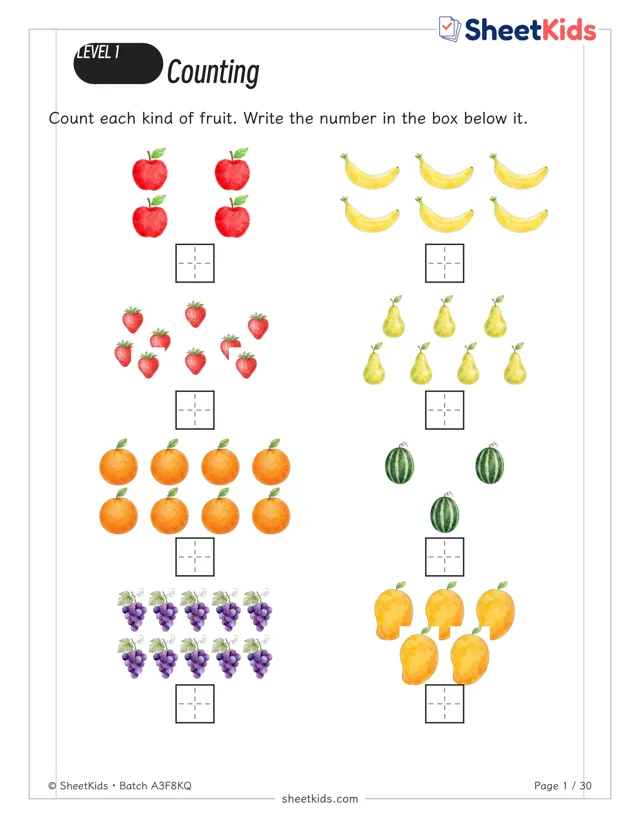
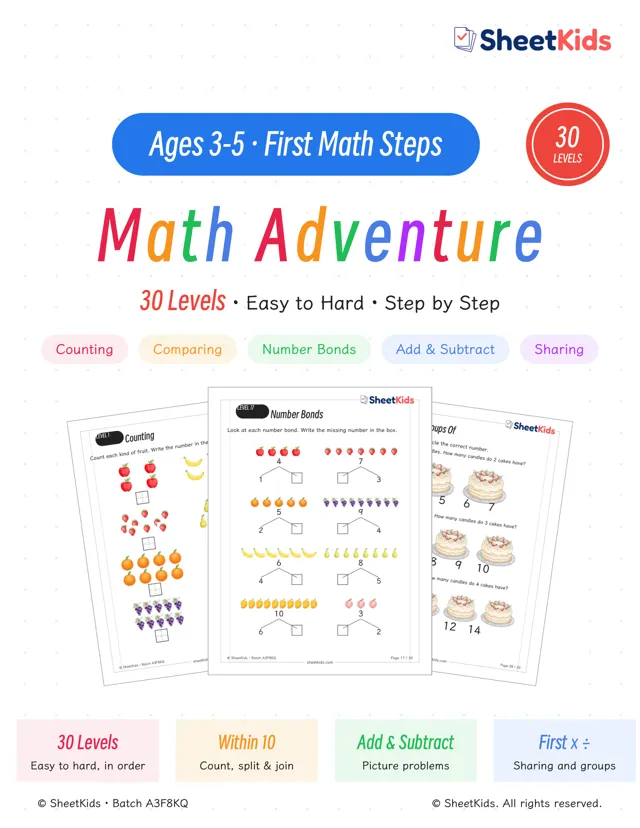 Cover + page inside
Math Adventure — 30 Levels
A 30-level adventure that starts with counting and comparing and walks all the way to first number bonds. Short levels mean a preschooler can finish one, point at the next, and stop while it is still fun.
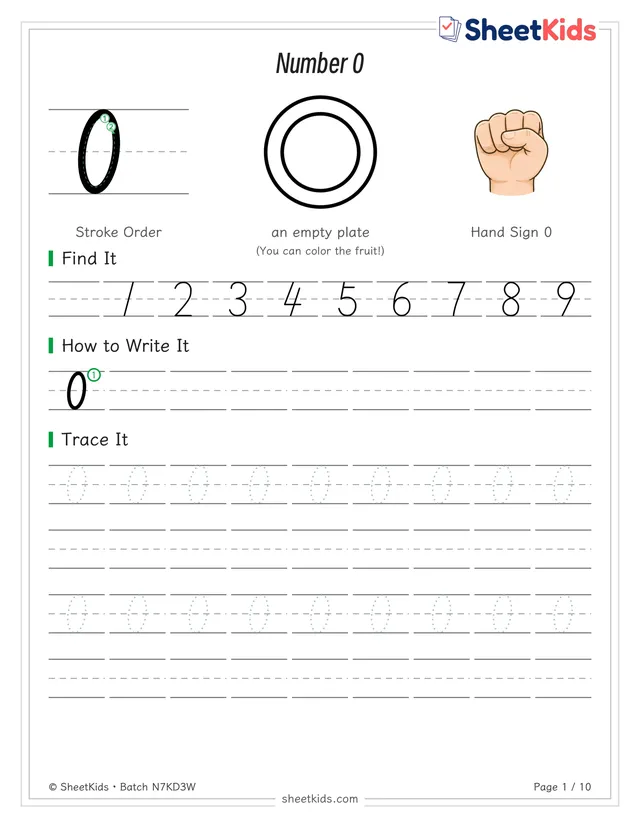
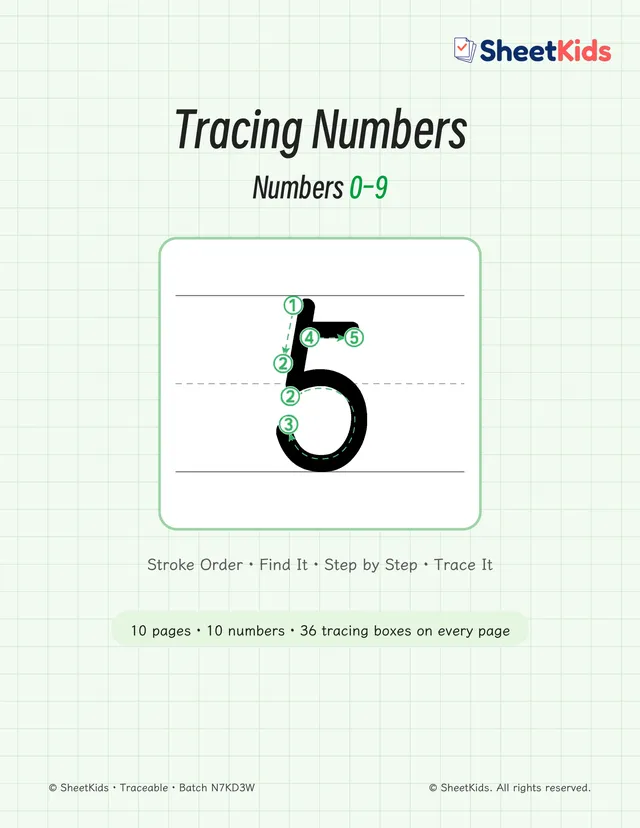 Cover + page inside
Tracing Numbers 0–9 with Stroke Order
One number per page, drawn big: watch the stroke order, find the number hiding in a row, then trace it in 36 roomy boxes. The natural first handwriting set for ages 3–5.
 Cover + page inside
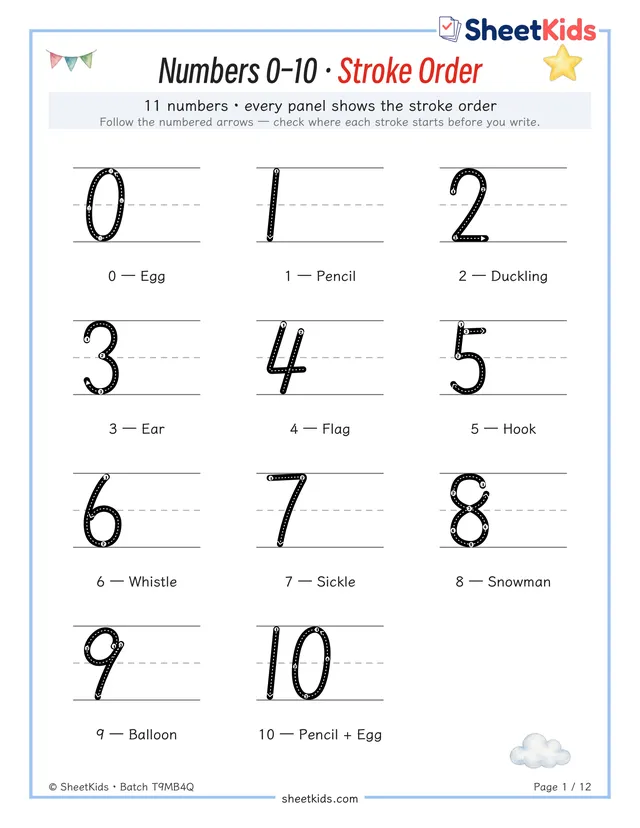
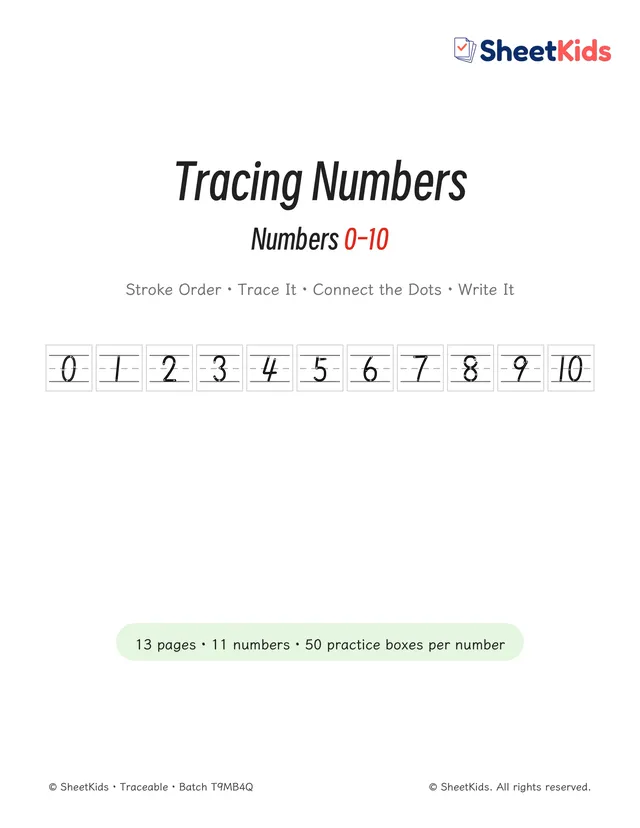
Tracing Numbers 0–10
Tracing with more ways to play: a picture and a hand sign for every number, trace-it rows, connect-the-dots and free writing space. A good second step once 0–9 feels easy.
 Cover + page inside
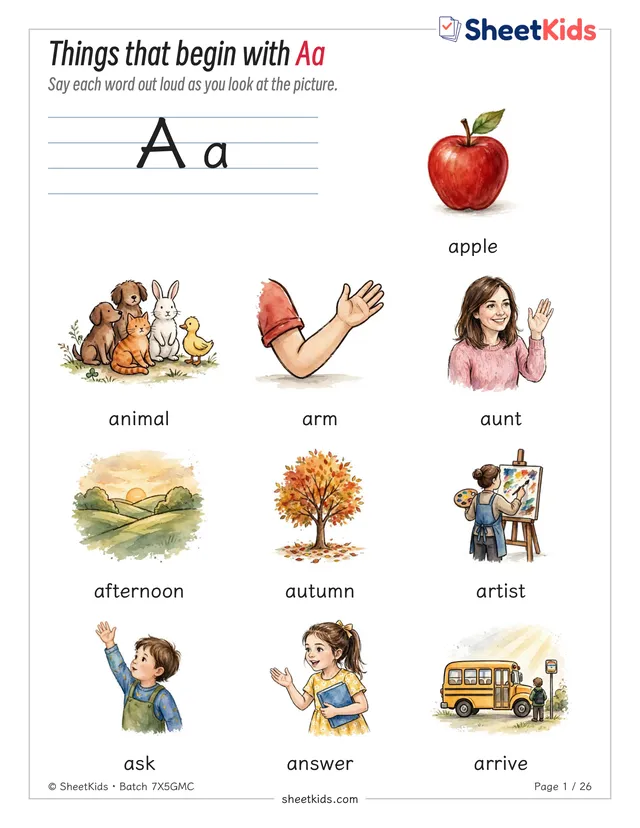
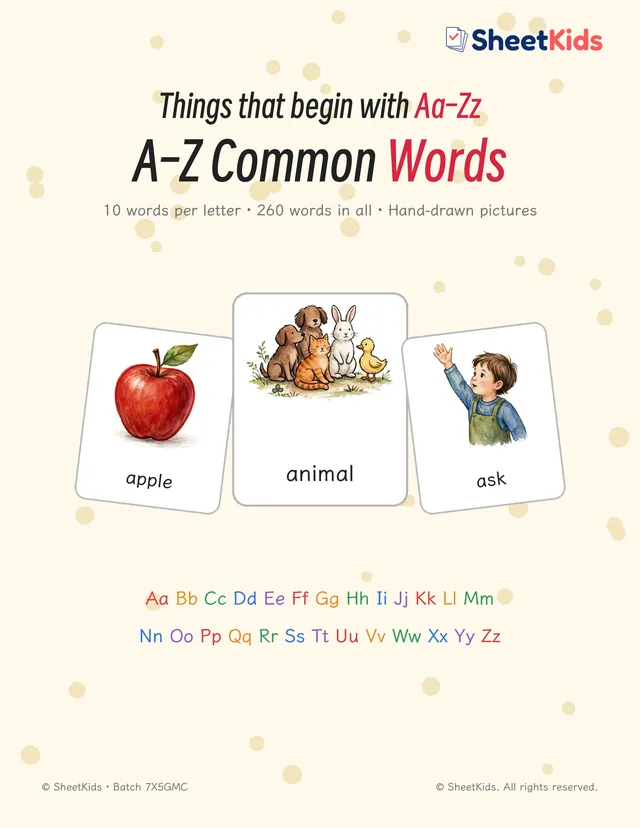
Alphabet Word Cards — Things That Begin with A-Z
Ten pictured words for every letter, 260 in all. At this age the cards are for looking and naming — say the word, spot the letter it starts with, and let reading grow out of talking.
 Cover + page inside
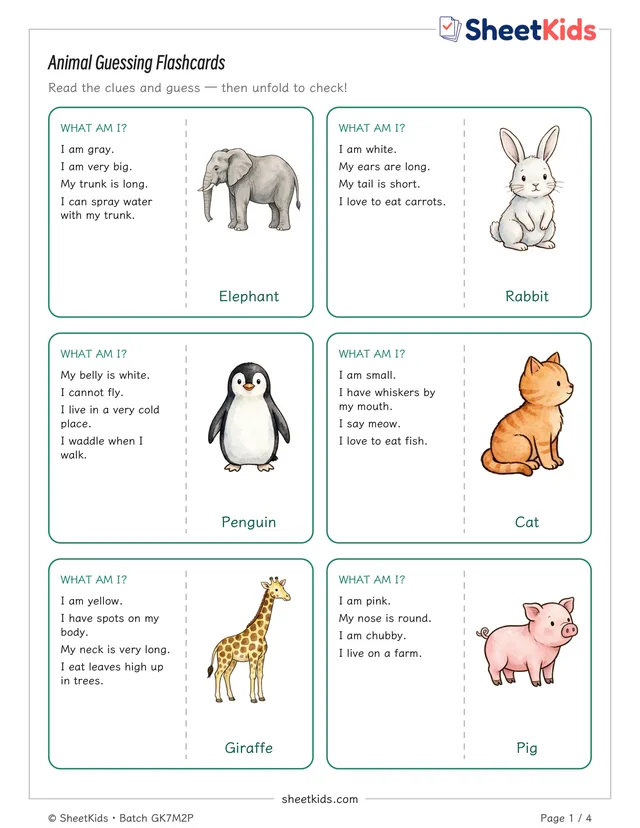
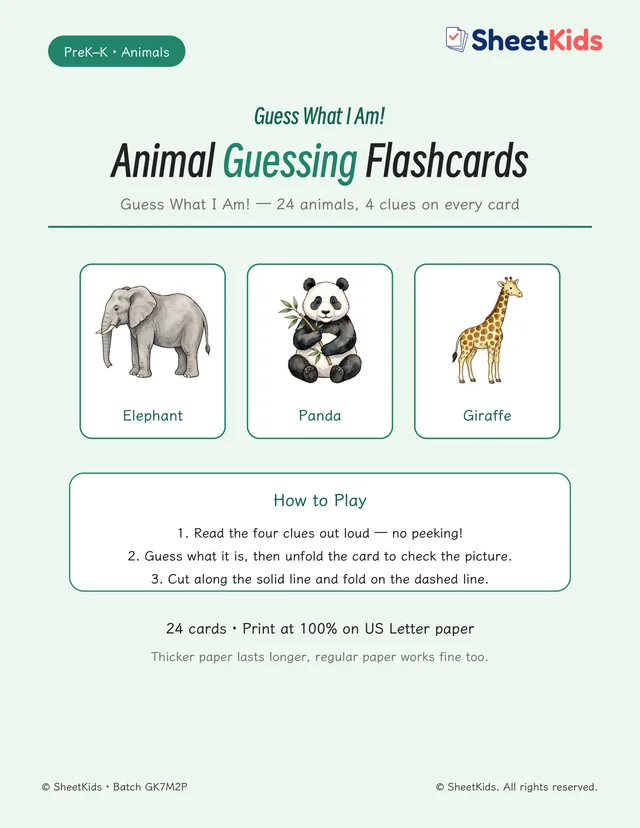
Animal Guessing Flashcards
Twenty-four animals to guess from four simple clues before the fold reveals the picture and the name. A kitchen-table favourite that builds listening and vocabulary at the same time.
 Cover + page inside
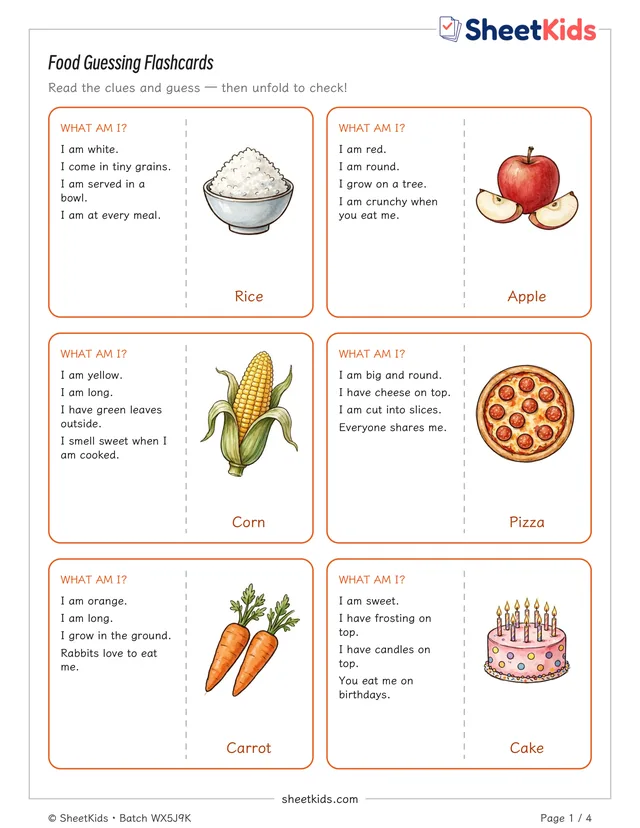
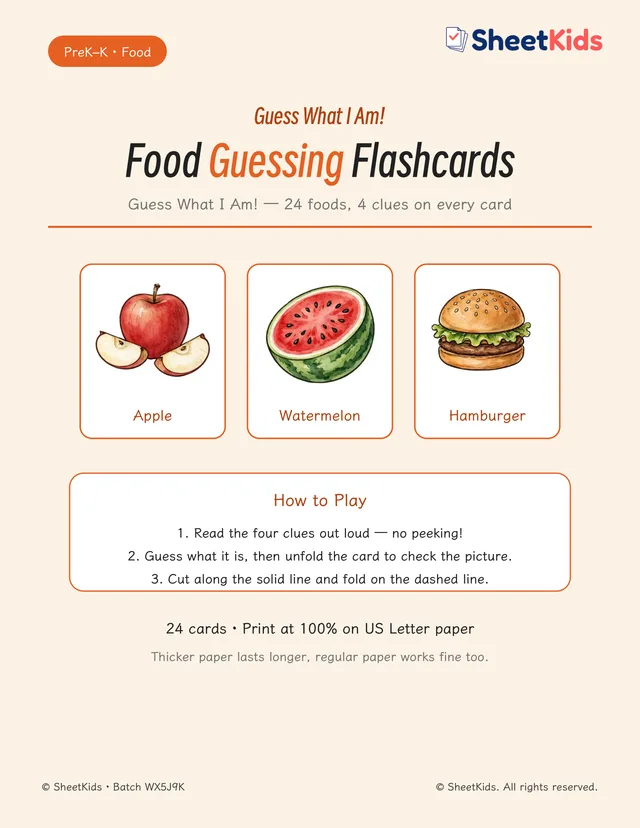
Food Guessing Flashcards
The guessing game with 24 foods. Naming, sorting and 'what do we eat for breakfast?' conversations — vocabulary practice that never feels like a lesson.
 Cover + page inside
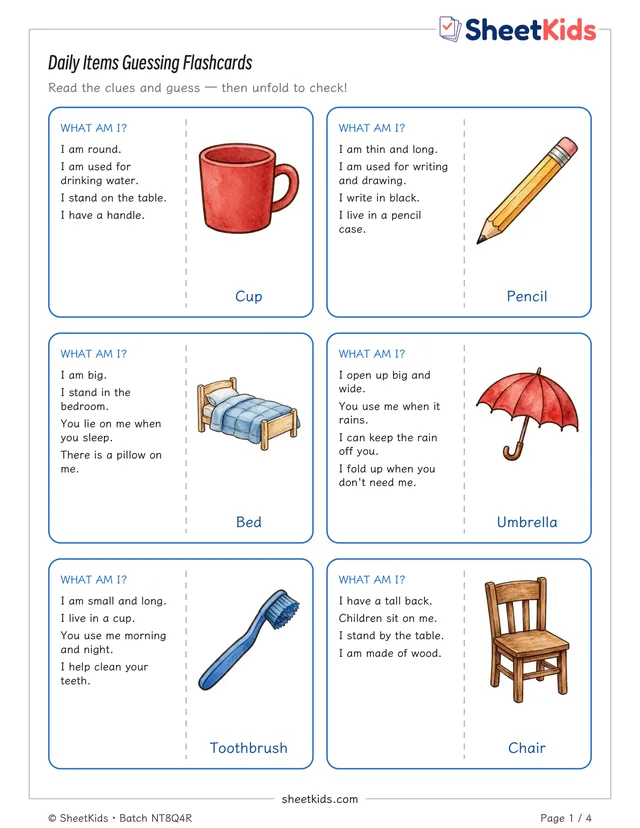
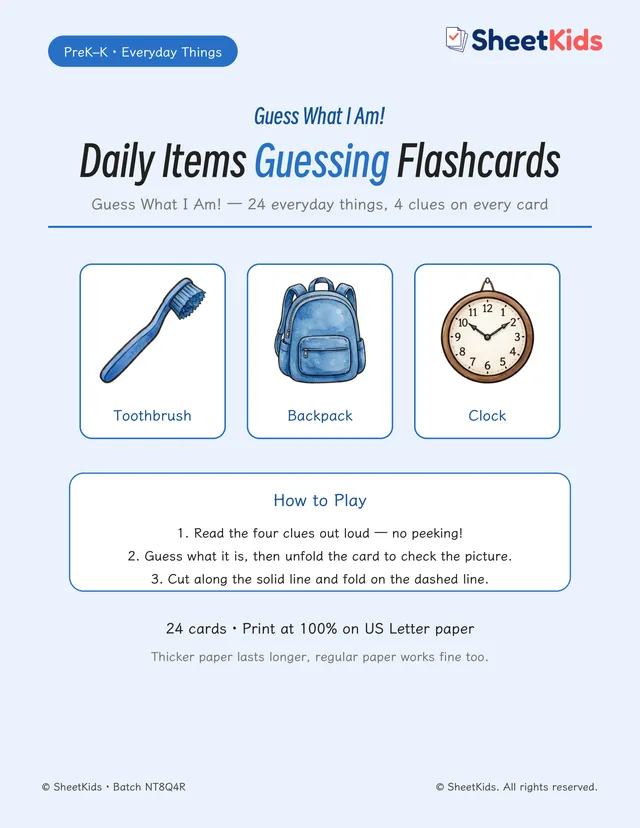
Daily Items Guessing Flashcards
Toothbrushes, cups, shoes and other everyday things, guessed from clues. The words preschoolers hear all day long, turned into a game they can win.
 Cover + page inside
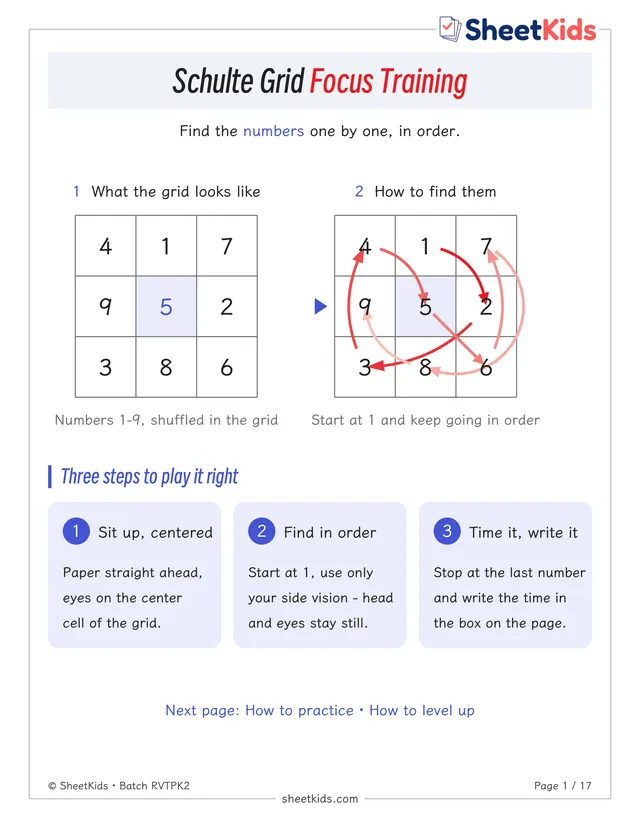
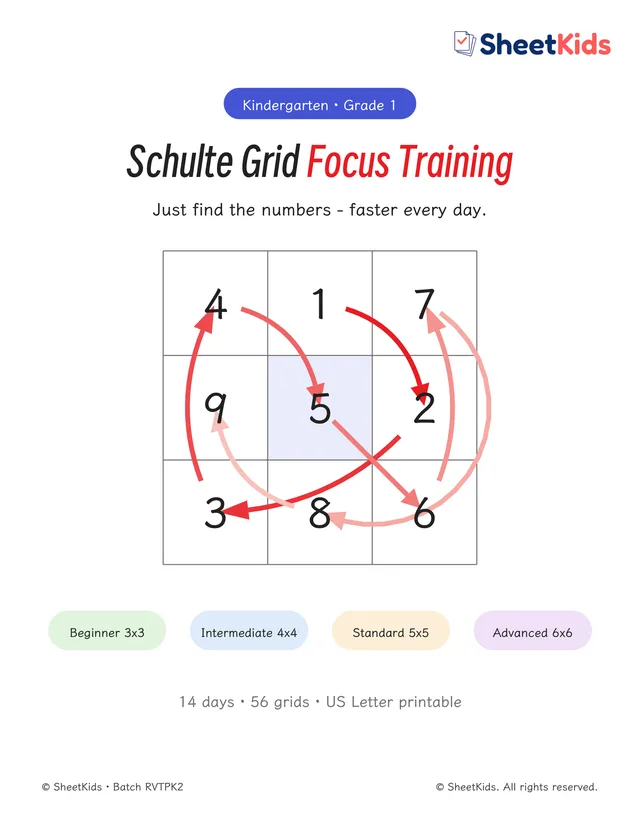
Schulte Grid Focus Training
Starts with gentle 3×3 grids: find 1, 2, 3 in order. For preschoolers treat it as a looking game, not a race — the bigger grids on the later pages can wait for kindergarten.
A sensible order for preschool
There is no wrong order on this page, but this sequence follows how the skills grow: control the pencil and count first, play with words alongside, and save the bigger focus grids for when the small ones feel easy.
Math Adventure
Start at Level 1 even if your child can already count — the early levels teach how the adventure works. One or two levels per sitting is a good preschool pace, and repeating a favourite level is practice, not cheating.
View the set → · 31 pages · 4 parts
Tracing Numbers 0–9 with Stroke Order
Print one number at a time and say its name together before tracing. If your child only fills half the boxes neatly, that is a complete session — the rest of the page will keep for another day.
View the set → · 11 pages · 10 parts
Tracing Numbers 0–10
Use this after Tracing Numbers 0–9, or alongside it for a child who loves variety. The connect-the-dots pages double as counting practice to 20, and the overview page makes a handy wall chart.
View the set → · 13 pages · 12 parts
Alphabet Word Cards
Do not drill these. Spread a letter page on the table, name the pictures together, and let your child point at favourites. Hearing 'apple starts with A' in play is the whole preschool job here.
View the set → · 27 pages · 26 parts
Animal Guessing Flashcards
Read the clues one at a time and pause between them — the guessing is the learning. Print the pages, cut along the lines, and keep a small deck in the car for waiting-time games.
View the set → · 5 pages · 4 parts
Food Guessing Flashcards
Play it at the table before a meal and let your child hunt for the real food in the kitchen afterwards. Connecting the card word to the real object is exactly the point at this age.
View the set → · 5 pages · 4 parts
Daily Items Guessing Flashcards
These cards pair well with a treasure hunt: guess the item from the clues, then run and fetch the real one. Movement plus naming is a powerful combination for three- to five-year-olds.
View the set → · 5 pages · 4 parts
Schulte Grid Focus Training
Stay on the Beginner 3×3 pages (Days 1–3) at this age and point at each number together if needed. There is no timing in preschool — accuracy and enjoyment first, speed much later.
View the set → · 18 pages · 6 parts
How It Works
Pick one page, not one set
Print a single page from any set below. Preschoolers work in minutes, not chapters — one finished page beats five abandoned ones.
Sit alongside, then step back
Read the instruction out loud, do the first item together, then let your child finish alone. The guessing flashcards are the exception: those are made to be played together.
End on a win
Stop while it is still fun and say what went well. Every page here can be reprinted, so a favourite tracing page or adventure level can come back as often as your child asks.
Questions Parents Ask About Preschool
What age can a child start with these preschool sets?
How long should a preschooler practise each day?
Does my child need to write numbers before kindergarten?
Are the guessing flashcards a test?
Which preschool set should we try first?
The Other Grades
When your child outgrows this page, the next grades are ready — and plenty of families run two grade pages side by side during the in-between months, when a child is too old for some of this and not quite ready for all of what's next.
Pick a set and print the first page today.
8 free sets for preschool, 115 pages — complete, print-ready, no sign-up.
See the Preschool Sets